Occultism and the Living World (19)

Mystics & Artist-Prophets:

.
You so Anti-Prophet, don’t Anti-Matter? (What?); Messianic [Solar] Prophet was a Mediator: In Christianity Jesus is recognised as a prophet, but this is only one of three main roles he fulfils, known as the “Threefold Office” (Prophet, Priest, and King). Christians view him as the final prophet, the Word of God incarnate, and significantly more than just a prophet—he is believed to be divine. In the Bible: The Gospels record people referring to Jesus as a prophet, such as “a great prophet is risen up among us” (Luke 7:16) or the “prophet from Nazareth” (Matthew 21:11). Jesus himself referenced his role as a prophet by noting that “no prophet is accepted in his own country” (Luke 4:24). In Islam: Jesus (Isa) is considered a major prophet and messenger of God, as well as the Messiah. In Islamic belief, he is a crucial figure who brought revelation, but he is not considered divine or the Son of God.
In conspiracy narratives, the history of Jesus within early Christianity is portrayed as a cover-up, suggesting that the Church has concealed “secret texts,” such as the Gnostic Gospels, including the Gospel of Thomas. These narratives often rely on older, non-expert sources, including the perspectives of individuals such as the 33rd-degree Freemason Albert Pike and J.D. Buck, to argue that Christianity originated as a mystery cult. Most historians agree that Jesus existed as a historical figure, though there is little evidence outside the Bible to support this. Additionally, many historians contend that while Jesus was a real person, much of what is recorded in the Gospels consists of myths added to elevate him beyond his historical context. Therefore, the theological versus historical debate regarding Jesus is unproductive, as both aspects represent simultaneous developments of layers of myths that characterise him alongside older pagan mythological themes and the historical individual.
Podcasters today are similar to the polemicists of the past, who participated in controversial debates using religious language. This resemblance also extends to the discussion of conspiracy theories, where modern polemicists frequently challenge Orthodox or Nicene Christianity. It’s important to recognise that the followers of Jesus had their own agenda, which played a significant role in shaping the New Testament as a means to promote new beliefs.
A more conspiratorial perspective views Jesus not merely as a traditional figure, but as a mediator or messenger within Christianity, which is seen as a cult religion possessing secret teachings with different levels intended for the initiates and the peasant class. During its early years, Christianity was characterised by two levels of teaching: one was public and accessible to everyone, while the other was secret, reserved for a select few. Buck articulated this idea:
In modern Freemasonry, in the ancient mysteries, and in all of the religions, there was always an exoteric [public] potion given out to the world, to the uninitiated and an esoteric [secret] portion reserved for the initiate, and revealed by degrees. –J.D. Buck
Exoteric refers to knowledge that is public and accessible to those who are uninitiated. At the same time, esoteric pertains to secret knowledge that requires individuals to prove themselves through passing tests and to keep specific secrets before they can access deeper layers of understanding. Buck noted that many secret societies and early religions operated in this manner, which Christians did not widely understand at the time. Even Church Fathers like Origen, who served as propagandists of the era, often directed anyone who claimed that Christian teachings contained layers and secrets toward a narrative that emphasised only public knowledge. However, Origen later advocated for a secretive process similar to those institutions he initially criticised, implying that a hidden dimension does exist. He even cited the Pythagorean mysteries as an example of a cult with secrets, suggesting that such secrecy was the norm for religious development.
Another Church Fathers Bishop Archelaus also stated: “the lord spoke in parables to those who were incapable of hearing, but to his disciples he explained these parables in private.” Jesus deliberately spoke in riddles to the public knowing most would not understand, yet gave the real meaning in private to select view (initiates or disciples within the secret organisation). The Bible according to Matthew 13:11 “To you it has been given to know the secrets of the Kingdom of Heaven, but to them it has not been given.” Jesus said to Jon in 16:12 – “I still have many things to say to you, but you cannot bear them now.” In Mark 4:33:34 – “he did not say anything to them without using a parable. But when he was alone with his own disciples he explained everything.” – Archelaus
Albert Pike confirmed that early Christianity had an initiation system just like the Pagans. He states: “In the early days of Christianity, there was an imitation like those of the Pagans. Persons were admitted on special conditions only – to arrive at a complete knowledge of doctrine, they had to pass three degrees of instruction.” Albert Pike explains levels of degrees as: “the initiates were consequently divided into three classes: the first, auditors; the second, Catechumens; and the third, the faithful.” “These Doctrines, and the celebration of the Holy Sacraments, particularly the Eucharist, were kept with profound secrecy. These mysteries were divided into parts: the first styles the mass of the catechumens; the second, the mass of the faithful.” – Pike
| Auditors: | Listeners who could only listen to basic teaching | ||
| Catechumens: | Those receiving instruction before baptism, still not allowed full secrets | ||
| Faithfull: | Baptised believers who were admitted to Eucharist and higher mysteries |
.
Bishop Archelaus also stated: “These mysteries, which the Church now declares to you who are transferred from the lists of the Catechumans, it is not her custom to declare to the gentiles.” …”For we do not declare the mysteries touching the Father, and the Son, and the Holy Spirit to a Gentile; Neither do we speak of the Mysteries plainly in presence of the Catechumans; but many a time we express ourselves in an occult [secret] Manner.” Christianity at that time had with it levels of degrees and secret doctrines just like the Pagans mystery cults they said they replaced.
Then arrived the Christian Heretics (Gnostics) who came upon these secret teachings not through the Church and its secret members, but through direct, personal revelations and mystical experience rather than through historical faith, tradition or public scripture. As a result you had anti-Heretic writers like Saint Irenaeus mentioning them in his recollection: “the Gnostic Christians declare that Jesus spoke in a mystery to his disciples and apostles privately, and that they requested and obtained permission to hand down the things tis taught them, to others who should be worthy and believing.” The Gnostics believes that: Jesus had private teachings, and that salvation came through inner awakening and you not the priest, held the key to the divine. For a while in history this was Christianity until the Church decided to purge the Gnostic denomination as they burnt their texts, and their teachings demonized. However, their teachings survived
The parallel between pagan mysteries and Christianity is so close both in ritual and symbology, Albert Pike even claimed that ceremonies used was from Mythras, he states: “The celebration of the mysteries of Mythras was also styles a mass and the ceremonies used were the same. There were found all the sacraments of the Catholic Church, even the Bread and wine of the Eucharist, in the Pagan mysteries,” – Pike. Later on the Basilideans confirmed pagan parallels they arose after the Apostles and practised mysterious of Egyptian gods interlaced towards Christendom popularised the zodiac against the symbology of animals inscribed into talismans.
This sect also proclaimed out creator-God was an Archon a lessor half-maker that created the material world as a prison. And that the real god was higher more pure made of light or the source itself, and reinforced that salvation didn’t come from faith or blind obedience, but through gnosis or secret inner knowledge. Also, Father Augustine also proclaimed Christianity as a true religion already existed before Christ, and upon Christs re-branding was called true Christian. Its implication means Christianity is more ancient than one might realize.
Ancient texts that were found like the Nag Hammadi paint a different picture of what Christianity could have been instead of focusing on Dogma, the text emphasises awakening or enlightenment, knowledge, and realising the divine spark within. The crucifix story was pushed to as focus point rather than becoming Christ, and upon a new interpretation after the first Nicene council it done away with Secret Knowledge of Mystery-Initiated religion to a dogmatic authoritarian religion.
You so Anti-Prophet, don’t Anti-Matter? (What?); Anti-Matter Adherence: In early Christianity, Catechumens were asked to leave the gathering as soon as the true teachings for the Faithful began. Within the landscape of secret cults, there exists a hierarchy of knowledge. As the centuries progressed, the approach to knowledge within secret societies became increasingly sophisticated and concealed. Yet, modern day parallels exists between Catehumens (persons receiving instruction in preparation for Christian baptism) and MAGA Christian nationalist fundamentalists regarding exclusion. There was no totalitarian aspect in early Christianity until the Gnostics came and put spanner in their social engineering plan. With MAGA being a modern religious ideology its parallel lies in the structural, psychological and behavioural aspect of initiation, totalising commitment, and identity formation.
The Priest sects simply knew what would happen if Catehumens were taught the teaching without them being ready for it. They we become MAGAs of the Patristic Era granted there would still be a focus on spiritual transformation and levelling up within the temple cult hierarchy, yet fully aware of the maladroitness and ineptitude that comes with the territory. What if it never came to be? A natural reaction would be a nationalist like rhetoric used as labels to advance gospel of power not realizing it is simultaneously for their own ends and yet staying true to its temple cult political domination. MAGA’s are basically Catechumens that have the same intense, transformative, and often exclusive nature of the belief system, but have de-evolved into Auditors or in Gnostics terms Hyletics.
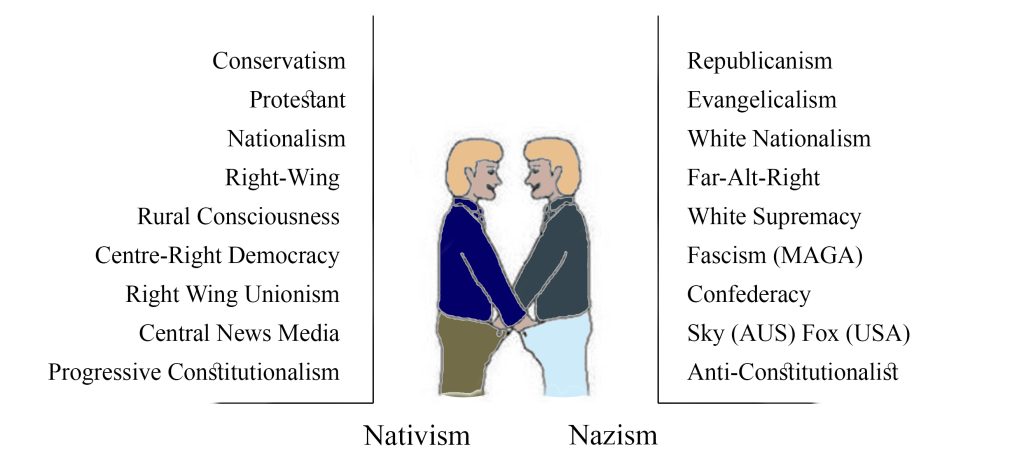
Their inability to move beyond rural consciousness and Nativism which stems from a sense of being “left behind.” This feeling of economic insecurity arises from the concentration of wealth in urban areas, leaving rural communities struggling. Social conservatism in these regions tends to be more homogeneous and traditional, fostering value systems that resist rapid social change. Consequently, rural areas are more susceptible to nativism, perceiving the increase in multiethnic cultures and immigration as a threat to their national identity. Its misguided value system that should not exist, Nativism is false belief system its utilitarian mysticism. This aberration in the psyche of nativism created a belief system that disregards the experiences of the first peoples or indigenous populations from whom their lands were stolen. Instead places them as the true nativist.
This misunderstanding has persisted into modern times, where rural consciousness and a nativist definition of the nation have shaped their identity. This often manifests as a longing for a place at the elite’s table, a misconception that everyone could exist on equal footing when, in reality, this was seldom the case. The elites rarely considered their needs. Moreover, the structure of the US Senate and the Electoral College disproportionately empowers rural states, allowing rural voters to exert a significant influence on national politics. While this may seem logical from a utilitarian perspective, it suggests that rural populations are viewed merely as a utility within structural political frameworks.
The situation can be understood as a combination of “left behind” perceptions and social conservatism, which has led to deep resentment toward urban elites. There is a prevailing feeling that the Democrats have abandoned these individuals in favour of urban white-collar interests. This discontent is often accompanied by a desire for protectionist and nativist policies that promise a return to a nostalgic past. Rural nativism often resists immigration, despite white immigrants make up the bulk of immigrants coming in, but never gets ridiculed as it more about race. This reactionary behaviour is driven by cultural changes and economic distress, leading to a perceived loss of status among rural populations. Consequently, there exists a division in consciousness that separates rural nativism from the rest of the nation, marked by a deep-seated animosity towards non-whites that can almost be described as insanity.
.
There is an intense longing for traditional values, particularly regarding gender roles, religious community, and gun ownership—especially in the U.S. A shared sense of isolation contributes to nativism, leading to a disdain for immigration, which is viewed as a threat to national identity. This creates a delusion in which rural identity is seen as exclusively theirs. Their false sense of ownership over identity causes rural consciousness to override a shared destiny with others. This mindset resembles fundamentalism and has cult-like qualities. It highlights the issue of a Nativist who can manipulate their position towards fascism while still having the ability to distance themselves from it simply by labelling their beliefs as patriotic. In reality, the aspirations of cities, urbanisation, and multi-ethnic federalism, alongside the hopes of the rural frontier, all share the common goal of achieving a national dream.
Rural nativism persists, along with the division it creates, which is further influenced by far-right ideologies such as White Nationalism. This ideology connects closely to nativism, framing rural areas as the “real” nation that must be defended against “outsiders.” Such beliefs foster an inward sense of identity, serving as a defence mechanism against the rapidly changing society and misunderstood federal systems. Additionally, this isolation is coupled with a Puritan belief in a divine mission, viewing themselves as God’s chosen people. This belief serves as the ideological backbone of American political Christianity.
Anyone who identifies with nativism can manipulate their stance toward fascism while still claiming their beliefs are patriotic. This creates a dilemma: a rural nationalist may easily transform into a racist, reactionary supremacist. However, when their ideology is challenged and deconstructed, they often retreat into a defensive nativist stance. When defending their views becomes too difficult, nativism conveniently provides a way out. This rigid us-versus-them worldview creates a sharp divide between the so-called “enlightened” elite groups and the outsiders. For instance, MAGA Christian Nationalism explicitly frames non-Christians—ironically, those who supposedly do not embody true Christian values [ironically, like MAGA itself]—alongside liberals and immigrants, as threats to their cultural integrity, necessitating an “us versus them” mindset.
There is a totalising commitment to identity with the Catehumens they receive instruction in specific, dogmatic worldview. Yet, a perceived notion of stepping up a grade is dangled as a goal or purpose to work towards supposedly growth is rewarded. MAGA functions as totalising identity merging religious belief political loyalty, transforming faith into a cultural identity focused on group belonging. No longer exists degrees levelling up or putting oneself to the frailty of the Church at least in Patristic way the doors are closed, but are initiated through [secret cult societies] media landscape, and cleverly curated propaganda packages that are sent out by intelligent agencies like the whole Qanon thing. Still, Catechumens with computer literacy are useful idiots, Catehunens as modern day MAGA Christian nationalist so backwards participate “reverse indoctrination” that filters faith through the lens of political, apocalyptic narratives. There is an adherence to authority often show intense, often unquestioning, loyalty to any Cult Leaders who might mimic rural consciousness and they would ordain the leader by God to protect their [supposed] threatened culture.
With an Apocalyptic Urgency and an ideology that frames current moment as a final, desperate battle between good and evil, creating a sense of urgency similar to an imminent judgement day. Alongside a Restorationist Goal like the Catehumens that often seek to enter ancient, foundational tradition, MAGA adherents often seek to return a mythologised, idealised past, specifically 1950s “golden age” where, they believe, a white Christian nation was inimitable. Be that as it may these groups will not evolve in a spiritual sense enlightenment is out of reach for them, as enlightenment requires a whole different mindset. There mindset is incongruent the path of reaching enlightenment because grace does not reward greed.
You so Anti-Prophet, don’t Anti-Matter? (What?); Negative Propaganda Mass at Critical: We are at inflection point in history whereupon the Christian Church that existed in Germany in the 1930s where ostensibly one of the most educated countries in Europe could throw itself whole heartedly behind the Third Reich, a demonic fascist ideology from the pit of hell. Yet here we are again in modernity where Christians in the U.S. engaging in perfectly evil corruptions of Christianity on a mass scale, we are seeing again in real time now. We are seeing the American evangelical movement completely eviscerate any remaining moral credibility it had, which probably wasn’t much to be honest. Back in the 1950s the Evangelicals opposed the civil rights movement, and as such they would always find themselves on the wrong side of history.
They completely stood beside every decision Trump has made including his first term as president. They conform to his image rather than being transformed by the renewing of their minds. They’ve become increasingly tolerant of his misogyny, his racism, his xenophobia, his hatred, his shunning language and rhetoric. They continue to rationalise and defend him even upon the release of the Epstein files that portray him as an abuser. It has come to conjugation appoint where we see Evangelicalism nothing more than a disease. Alongside, adopting Trumpism they became apologists for the MAGA movement.
We are an inside a type of fractal grift financed by billionaires interest and corporate elites to promote a specific nationalistic form of Christianity with a desire to secure economic interest, foster social stability, and exert political power. The coming of a “plutocratic theocracy,” that leverages religious ideology to align with conservative capitalist values. They want to One: Secure Economic Interests with Unregulated Capitalism by combatting social spending by funding capitalist institutions over redistribution of wealth. Weaponising Culture War to Lower Taxes with culture issues like abortion and school choice to win over working class voters. Protecting Profits by bankrolling Christian Nationalist movements that attack environmental regulations, labor rights, and tax structures that would otherwise threaten their wealth, using “God” as justification for their political agenda.
Two: Social Control and Stability: by Countering Secularism the technocrats believe the secular world is chaotic and Christianity provides stability. Use of Seven Mountains Mandate: the same people want to control all aspects of government business, media, family, religion, and arts/entertainment. And Fostering Docility: a Christianity that focuses on personal sin, obedience and afterlife for a more compliant workforce. Three: Creating New “Moral” Elite: through “reactionary Nihilism” a movement to replace “right-wing” elites for “nation-state” and “conservative social order” above individual material needs. And the “Moloch Effect” a form of self-defence for wealth caught in competitive loop. Four: Rise of “Cultural Christianity” and National Identity; Cultural Christianity through technocrat’s vision of Jesus as good and wise. And the Shift from Mainline to Evangelical/Pentecostal with a focus away from old liberal money to Evangelicalism that engages in political lobbying and “spiritual warfare.”
Of course everything highlighted are just Distortion of Reason for the past 400 years Western Society has shifted from using reason as tool for human improvement to worshipping it as an absolute end in itself. This “Blind Faith in the value of reason” has led to a society that is highly technical, yet directionless. Everything highlighted is a collection Technocratic Coding Goup with nationalism as its decoding translator. The world is run by “process-minded” specialists and experts the demon heads in an Ahrimanic world who excel in manipulating systems, but lack broader understanding of human, social, moral consequences, just like media propaganda demon heads both social and legacy that sell out and by extension sell out their audience.
There is a lack of accountability for influential figures both in social and legacy media who intentionally spread lies, including Jack Posobiec, Ben Shapiro, Candace Owens, Zachariah “Zack” Hoyt (Asmongold), Tim Pool, Nick Fuentes, Joe Rogan, Piers Morgan, Tucker Carlson, Megyn Kelly, Jesse Watters, Greg Gutfeld and others. These platforms are ultimately not honest media; they serve as hubs for misinformation and right-wing propaganda. Many of these influencers are, at best, useful idiots and, at worst, controlled assets. They rely on a base of angry, unseasoned youths to fuel their movement. As the cracks in this facade begin to show, these young men will eventually realise that they have been deceived. The results they were promised will never materialise, and the sinister Cabal they believed they were overthrowing has, in fact, been pulling their strings the entire time.
Consequently, these vile, wretched individuals and their Nazi-like role-playing [Larping] tactics will double down on their rhetoric, preying on their audience’s fears. They utilise anger and xenophobia to further radicalise them. By fanning the flames of hatred and even suggesting that figures like Epstein and Hitler were “cool,” they shepherd these individuals back into their folds. This process does not lead them toward a more moderate position but instead pulls them closer to extremism. They instigate conversations of hate because hateful individuals are easier to divide, and divided individuals are easier to manipulate and control.
Rita Panahi of Sky News and Megyn Kelly of SiriusXM are among the most loathsome media presenters today, embodying what feels like negative, Ahrimanic forces in their physical appearance. They often highlight comments that contradict their own arguments, catering to a far-right audience that seems to revel in their messages. One notable case is the portrayal of Alex Petty, who, instead of being recognised as a compassionate nurse dedicated to helping veterans and beloved by his community, is depicted as a miscreant. Sky News, along with Rita Panahi, consistently promotes a right-wing narrative focused on demonization and an anti-plutocratic worldview, which includes justifying the brutal actions of the ICE enforcement agency.

.
When Megyn Kelly launched her new media show, she initially avoided hyper-partisanship. However, she soon realised that this approach was not attracting the viewership she needed. As a result, she aligned herself with Trumpism and became a vocal supporter of MAGA policies. She now feels compelled to engage in culture war issues that audiences moved past a decade ago, such as criticising Bad Bunny, while neglecting to address the actual fascism, rampant imperialism, and colonialism that are infiltrating American politics today. Additionally, there have been investigations into her concerning her actual sexual identity, revealing surprising findings about her physical features, which indicate male, which is ironic given her fervent rhetoric regarding transgender issues.
You so Anti-Prophet, don’t Anti-Matter? (What?); False Altruism Equals No Equity Paradigm: The U.S. ownership of rights such as free speech, gun laws, and the Bill of Rights has defined the nation and provided its people with unmatched freedoms compared to other countries. In this context, citizens trust their government to uphold the Constitution. While it may appear that people have complete freedom, it’s like owning a home while still being required to pay annual property taxes. The mere possession of legal titles often undermines perceptions of freedom. However, there is some flexibility in personal freedoms from that ownership. It is concerning how easily the Trump administration could undermine those freedoms, disregard the Constitution, and instil corrupt lawyers within the court system.
In Australia it has less ownership of rights, as the Parliament ultimately has the final say through ordinary laws. What Parliament grants can also be taken away. The constitution is based on trust; we vote for representatives, hoping they will use their power responsibly and not infringe upon our lawful rights. Americans rely on their constitution to protect them from government overreach, whereas Australians trust their government to safeguard them from their own decisions. These are two distinct approaches, yet one is more notable: Australia appears to limit certain freedoms or give the impression that they are conditional. This framework effectively dismantles [false] populist or anti-pluralist movements when such leaders and movements do not genuinely represent the people. It aims to address the prejudices some rural individuals may hold against non-white immigrants, while also navigating the complexities of political correctness, misogyny, homophobia, and trans-phobia within the culture. Ultimately, it serves as a policy aimed at combating ignorance among the populace.
Australia may have a Nanny State reputation, but the State protects its citizen from itself [a policy against stupidity], an anti-virus for the collective darkness of [Jung’s] Shadow, it’s not perfect, but you can tune that anti-virus for integration and growth. As opposed to United States rights and freedoms that come with it chaos and despair. Having no safeguard means a long arduous fight against an establishment that grew too big to control. The constitution had all its power reduced to an impotent paper waste.
It may seem that the left-behind and rural nativists, who felt marginalised, voted for the candidate who was not the incumbent (Trump) based on his economic pitch. However, this perspective fails to recognise who Trump truly is and inadvertently overlooks rural ignorance. The false populist has exploited existing racism, misogyny, homophobia, and trans-phobia within the culture. As a billionaire and a member of the oligarchy, his past was well-documented, yet these rural voters couldn’t seem to connect the dots. He successfully entrenched a populist divide, making any notion of class solidarity impossible to envision.
While the left-behind and nativist voters may have economic reasons for voting against their own interests, it’s not entirely accurate to say they are motivated by racism. Instead, they are responding to a conservative appeal that aligns with their instrumental reasoning. Their rural consciousness intertwines nativism with extremist ideologies [Nazism], and simply suggesting they believed in Trump’s economic rhetoric misses the mark. Vulnerability does not justify a lack of awareness.
The rural nativist consciousness had already been abandoned by the established corporate Democrats for decades. When the Clintons shifted the centre-left party further toward the far-right, even more so than the Republicans—it fractured something deep in the American psyche—much like the realisation that the United States had lost the Vietnam War. This shift, coupled with the ongoing political manoeuvring and upheaval stemming from the Israel-Palestine conflict, led many who previously supported a pro-union and pro-democracy party to switch sides. As a result of this abandonment, they became susceptible to the influence of the right-wing and Trumpism. And the Right-wing supporters had two parties that aligned with the psychological framework of rural nativists, leaving the left who didn’t switch sides alienated.
Be that as it may simply switching side does not mean anti-establishment as no such thing as anti-establishment right-winger it’s contradiction in terms. If your right-wing your whole existence is to hold up everything about a country that has also destroyed it. Right-wing party by its nature is in favour of corporations, billionaires the corruption, the war mongering.
Politics involves not only shaping and reforming ideologies, but also the clear fact that the Democratic Party has lost favour among certain demographics. However, this doesn’t mean they cannot change their branding; even reaching back to the pre-Clinton era can be a goal. The goal is to create a hybrid that combines liberalism with democratic socialism, while addressing previous criticisms.
The Democrats have often overlooked rural America, as these communities have historically held anti-government sentiments. They can be seen as individuals with grievances, prone to fundamentalism and cult-like thinking. While the oligarchy represents the ultimate challenge, its loyal supporters are often the rural Republican nativists. This makes it easy for leaders like Trump to communicate his message, as rural America often oscillates between Nativism and Nazism. In this context, race is treated as one of many utilitarian reasons for their beliefs, neither above nor below other concerns.
Both sides of the debate often find themselves sitting on the fence, questioning democracy almost as a philosophical exercise, pondering its very existence [Independent party fence sitters]. They believe they are too evolved to take a stand, remaining in a comfortable position of detachment, free from Pascal’s moral wager and its dilemmas. They can easily slide into a rural nativist perspective, shifting between various positions that lie outside the typical political spectrum. While they may express strong disdain for Trump, they also make remarks suggesting he isn’t all that bad. Critics in niche fields that relate to politics, who ground their meta-ethics in anti-liberal sentiments inside their conservative echo chambers, have not fully accepted that Trump is a villain who exceeds even the worst past Democratic presidents; they need a reawakening or an actual awakening.
These individuals often hyper-fixate on “blue-haired woke liberals” who react to them on social media. Yet, when Nazis and bigots infiltrate the conversation, there is a surprising silence from these critics. Suddenly, the onus falls on the aforementioned “woke” liberals to accept and tolerate these extreme ideologies. They argue that “woke” culture is ruining the arts and label it an extreme ideology, while remaining unconcerned about the other extreme ideology of fascism, which represents the most violent form of political thought. That is also happening in real-time as in right now in early 2026; you can’t have it both ways. At this point, any mention of “woke” from corners of the niche market signals to me that you’re likely harbouring bigoted views.
You so Anti-Prophet, don’t Anti-Matter? (What?); Depredation of Guilt [Homosexuality]; Depletion/Extraction Reaction: Either that, or there is an inability to connect the goals of state-sponsored movements to create a distraction by promoting concepts like wokeness, transgenderism, and homosexuality. These are not merely natural qualities that have evolved socially since the dawn of civilisation—qualities that can be found in nature and the animal kingdom. Instead, are propagandised by politically neutral agents that serve as distractions in social media, capturing attention and sparking debate. For instance, drag queens, who promote satanic symbolism through their face painting and makeup artistry, are often presented to children in settings like classrooms [& social media] during story-time is abnormal. Such presentations can be viewed as psychological operations (psyops) designed to create divisions and do not resonate with those who genuinely identify with these movements.
It seems there is an effort to strip away authenticity and honesty to provoke right-wing or anti-woke individuals. This cognitive dissonance often highlights the culprits as leftist liberals, while ignoring the role of state cults and right-wing Republicanism. Interestingly, the most searched topics for transgender pornography often come from red states, where many closeted homosexuals are also found among Republican officials. Ironically, the policies they actively oppose, such as abortion rights, women’s rights, and same-sex marriage, are often the very things they secretly desire.
Often, there is a tendency to placate an aggressive religious macho stance by asserting that men should not engage in same-sex relationships, as outlined in the Bible. This perspective often confuses two distinct propositions: equating same-sex intercourse with same-sex marriage, which is separate issues altogether. In Chapter Mathew 19:3:9, Jesus reaffirms the Biblical standard for marriage while also challenging and reinterpreting it. This passage primarily addresses divorce, stating that the only legitimate reason for divorce is sexual immorality; therefore, anyone who marries after a divorce is committing adultery.
The Biblical text has little relevance to the appropriateness of same-sex marriage or same-sex intercourse. Jesus quotes Genesis 2:24 in his argument, highlighting that marriage is something humans cannot arbitrarily annul. He uses this descriptive explanation of pair-bonding and independent kinship units to support the idea that marriages are unions secured by God. Therefore, they cannot be annulled arbitrarily by human agency. In modern times, Genesis 2:24 are often viewed as a guideline for marriage, but it was originally descriptive, written during a period when polygamy was common. This interpretation is a distortion of the passage’s original purpose, as it has been reinterpreted to serve as a guideline for monogamy.
Conservative Nationalists often equate differences between what they term ceremonial, moral, and ritual laws. This is a false contention, as no such division exists anywhere in the Bible; it is entirely a post-Biblical invention. The distinction is not between ceremonial, moral, and ritual laws, but rather between moral and civic laws—a concept originating from Aquinas. Alongside early theologians from Alexandria in the early centuries, we see a twofold division of laws into ceremonial and moral, which is also entirely post-Biblical. This division is an attempt to categorise laws into those that are convenient to keep and those to discard. They label the laws as needed to rationalise their removal from their worldview. This distinction is not found in the New Testament. While Paul and others categorise laws into different types, their classifications do not align with the ceremonial and moral division, and there is no comprehensive identification of all the laws in the Hebrew Bible.
However, we have texts like Acts 15, which discusses the Jerusalem Council’s decision that there are only four requirements for Greco-Roman followers of Jesus: they must abstain from things polluted by idols, sexual immorality, things that are strangled, and blood. Acts states that Paul took this message and shared it with various congregations. However, Paul himself might not have believed that the law requiring abstention from idol-polluted things was necessary, unless he felt it could scandalise someone weak in faith.
The New Testament is already engaging with the laws that believers choose to keep, and there is inconsistency in how those laws are applied. Nowadays, few people adhere strictly to these prescriptions. Many develop new ways to rationalise which laws to follow and which to discard, often dividing them into ceremonial, moral, and civic categories. Even then, there is inconsistency in their application, as some laws clearly outlined in the Hebrew Bible as moral are rejected or neglected. At the same time, certain ceremonial aspects of the Ten Commandments are often considered purely moral. Ultimately, much of this is negotiable and has changed over time. None of these interpretations are inflexible or beyond question.
Proponents of Christian Nationalism often defend passages from the Hebrew Bible that are ethnocentric. They tend to selectively reference the New and Old Testaments to support their arguments. However, as previously discussed, the New Testament does not condemn same-sex marriage or relationships. The question of whether the New Testament supersedes the Old Testament through Christ’s revelations is irrelevant unless one has an overwhelming desire to win debates. Ultimately, the New Testament does not condemn same-sex marriage. At the same time, the Old Testament contains ethnocentric contexts that support Christian Nationalism, even in light of the New Testament—essentially moving the goalposts.
In Romans 1, Paul constructs an argument concerning the depravity of the Greeks as part of an attempt to ensnare the Jewish audience rhetorically. He makes the point that they, too, are violators of the law and thus deserving of death. In this argument, he bases his claims on natural theology—the idea that one can form an adequate concept of God and how to worship God simply by observing and reflecting on nature. Since the Greeks have contemplated nature, they should have a proper understanding of God. However, they worshipped the created rather than the creator. Therefore, they are without excuse, and God condemns them. One of the consequences is that God allows them to be consumed by unnatural desires.
The notion is that human sexuality has a kind of restraint or governor, and God removes this restraint, letting the sexual desires of the Greeks run rampant. This results in both male and female same-sex intercourse, suggesting that such desires do not occur among those who are faithful to God. This assertion is fundamentally false; it is an inaccurate anthropological understanding of human sexuality. While Paul’s argument may have been dominant in the 1st century C.E., it is entirely out-dated and incorrect based on our modern understanding of human sexuality.
There is no mention of same-sex occurrences in the books of Titus and Jude, and it is misleading to claim that these texts are unfavourable towards them based on the destruction of Sodom and Gomorrah. In fact, Titus does not address same-sex intercourse or marriage at all, while Jude verse seven is often interpreted as referring to same-sex actions. This verse draws a comparison between Genesis 19 and the story in the Book of Enoch, suggesting that the men of Sodom acted in a similar way to the angels referred to in Genesis 6, who engaged in sexual relations with human women.
The men of Sodom were pursuing “sarkos heteras,” a Greek phrase that translates to “other flesh.” Unfortunately, it is often misinterpreted as “unnatural lust,” leading to the erroneous association with homosexuality. However, this phrase actually refers to the sexual relations between humans and angels. The scholarly consensus indicates that Jude verse seven condemns the men of Sodom for their attempt to assault angels sexually, which parallels the wrongdoing of the angels in their relations with human women described in the Book of Enoch, riffing on Genesis 6.
Moreover, even when we examine Genesis 19, it is not a lesson condemning same-sex intercourse or marriage. The text illustrates the evils of inhospitality, similar to the story in Judges 19, where the men of the city threaten male visitors with sexual assault as a means of demeaning, shaming, and asserting dominance over them. This behaviour, which is not driven by sexual attraction, is still prevalent in many parts of the world today. Sexual assault is used as a tool of power to belittle and humiliate others. This serves as a stark example of the inhospitality that characterised the cities of Sodom and Gomorrah, and this perspective aligns with scholarly consensus.
The idea that the Hebrew Bible and the New Testament are harmonious is fundamentally false; in fact, neither text is internally consistent. Both are multi-vocal collections of writings, created at different times by various authors, each with distinct purposes and audiences. They have different rhetorical goals and are influenced by diverse worldviews, which is why they often conflict with one another.
Malakoi is a masculine plural noun meaning “soft ones,” referring to men who take the receptive role in same-sex relationships. Arsenokoitai is a neologism coined by Paul, derived from two Greek words found in the Septuagint translation of Leviticus 18:20. “Arsen” mean men, while “koitai” is a plural noun meaning beds. This is based on the phrase “mishkave ishah” found in Leviticus 18:20 and 20:13, which refers to a male lying as if he were with women, yet still being male. The idea is that having sex with another man is viewed as if it were with a woman. Thus, Paul is directly referencing these passages in Leviticus, and the majority of scholars agree that this term likely refers to men who take the insertive role in same-sex intercourse.
In 1 Corinthians 6:9, we see Malakoi and Arsenokoitai mentioned one after the other, referring to those who take the receptive role and the insertive role, respectively. These roles were understood to exist in male same-sex relationships—there was no concept of a versatile role; it was either one or the other. They did not have the same understanding of sexual orientation as we do today.
In Romans 1, discussions about same-sex relationships coincide with themes related to the end of the world. However, the passage does not specifically address apocalyptic conditions; rather, it reflects the social context of the 1st century C.E. Paul attempts to explain Greek sexuality in ways that are, by modern standards, demonstrably flawed. Both Protestant and Catholic traditions are not entirely unbroken; instead, the composition of the New Testament is quite ascetic. Early Christians took the teachings of Jesus and Paul seriously, especially as represented in Matthew 19. When Jesus states that some will make themselves eunuchs for the sake of the Kingdom of Heaven, it indicates that celibacy was considered the initial tradition. In fact, many early Christian leaders went so far as to castrate themselves to live as eunuchs.
However, Christianity soon recognised that this practice was not viable for the long term, and it eventually became frowned upon to the extent that such actions would disqualify someone from holding a clergy position. This is just one example of many traditions that have evolved through time, much as the negotiations surrounding slavery became a significant issue in the 19th century. On the question traditional verifiability plus scripture they are also contingent sometimes morally wrong as is the case with slavery. Which is something more verifiable as something consistent within scripture, and within tradition all the way down to the 18th or 19th century just because there are verifiable as part of scripture and tradition – it does not mean they are non-negotiable, it’s all negotiable. No one today asserts the authority of scripture or tradition or both who is not with morals that have been re-negotiated.
Claiming that Church tradition has been unbroken for 2,000 years is incorrect. The consistency between scripture and tradition does not inherently make infallible, inspired, or inviolable; both are subject to negotiation. Much has already been negotiated, and asserting this claim often serves as a marker of identity for right-wing, authoritarian interpreters of the Bible.
You so Anti-Prophet, don’t Anti-Matter? (What?); The Moralistic Fallacy Observer Wave: Self-proclaimed behaviour expert Chase Hughes argues that in the aftermath of Charlie Kirk’s death, there should have been a collective sense of sympathy. Instead, he observed that some segments of the internet celebrated his death. He stated, “Celebrating the murder of a man because he wore a different political jersey” indicates that the issue goes beyond Charlie Kirk as an individual. Whether people liked him or disliked him, he believes that the reaction reflects how political murder has become just another headline in today’s society. He contends that we have reached a new low, with people cheering online as if their team has won a Super Bowl. According to Hughes, this is a sign that an evil exterior is seeping into normalcy, indicating that society has crossed a line into something much darker than politics.
What a complete misunderstanding! His use of “both-sidesism” to project moral superiority under the guise of passive implication suggests he thinks he has unlocked some new wave of unhinged human behaviour. For someone who describes himself as proficient in psychology, he fails to grasp that an unsympathetic reaction is often a normal response to an unlikable person. He seems to believe that the individual in question is a saint when, in reality, he is a covert narcissist. Anyone familiar with narcissism understands that covert or vulnerable narcissists can be among the worst kinds. Their victims endure perpetual emotional abuse that gradually erodes their spirit and soul over decades. It’s impossible to love a narcissist; there can be no genuine friendships or emotional connections. Instead, interactions are based on probabilities, abuse, and transactions. Narcissists lack empathy, authenticity, and the ability to transcend their own self-interests, as they are driven solely by their own needs.
There was an episode of friends where Rachel’s Boss Joanna, from Bloomingdales had died: the scene evaluated through Joann’s assistant Sophia:
Although not much is shown to happen between Sophie and Joanna, it's quite clear that Joanna dislikes and abuses Sophie. Her snide and opprobrious remarks to Sophie always border on annoyance, in spite of Sophie trying to be nice to her. When Joanna dies, Sophie doesn't hold it any longer, and comes to work with a huge smile on her face after hearing of Joanna's demise. Rachel asks Sophie if she knows about Joanna's death and Sophie says yes.
The parody of friendships highlights real-life situations. An older covert narcissist, aware that their long-term relationships have reached an endpoint, often finds ways to ensure their partners end up with nothing after the relationship concludes. This can happen through divorce settlements or other malicious tactics. In such cases, the only hope for the partner may be to wish for the narcissist’s death. If that wish is granted, it can lead to a passive sense of relief, even a mild celebration, over the narcissist’s passing.
This dynamic reflects a broader, troubling reality. The cheering one might hear during a Super Bowl can be likened to a reaction against a top-down, hierarchical, narcissistic system, where seeking liberation through uncontrolled, habitual means becomes a form of relief. There is a distinction between condemning political murders and expressing sympathy for the deceased; condemnation of political violence has never been ignored—it’s clear that the left finds such acts detestable. On the other hand, the extreme right did not seek condemnations but rather offered condolences. However, condolences lose their meaning if they don’t evolve or progress beyond their fixed point. Charlie Kirk was neither a messianic figure like Jesus nor a cultural icon like Elvis.
The notion that we are entering a new era of immorality as a new normal is the most ignorant thing I have heard in a while. Throughout history, materialism has distanced us from our souls and the practice of ancestor worship. The idea of the “death of God” has replaced reverence for saints and spirits with hero worship. This may help explain why some conservative groups elevate Trump as a saviour, despite his origins as a failed business man in Queens. They operate under the mistaken belief that they have exclusive access to the truth, even when their claims lack evidence.
Hero worship can carry religious undertones and may often verge on superstition. Consider the racial violence that occurred in America between 1882 and 1968, during which Black Americans were lynched. This tragic reality was not as straightforward as it may seem; entire towns, including families with children, would gather to witness these horrific rituals. Society relies on portraying certain behaviours as usual. Akin to the Romans, who gathered to view blood spilled in the coliseums. And this is why Christian Conservatives have an unconscious need to forget through superstition. The Romans were generally a refined society, and many disapproved of sporting events that featured nudity, even as they freely watched bloodshed for entertainment. While this might seem shocking by today’s moral standards, it is reminiscent of modern audiences who consume violent content on television and in movies. However, the Romans were not just seeking entertainment, and the same could be said for contemporary media. It was more about grappling with mortality and the uncertainties it brings.
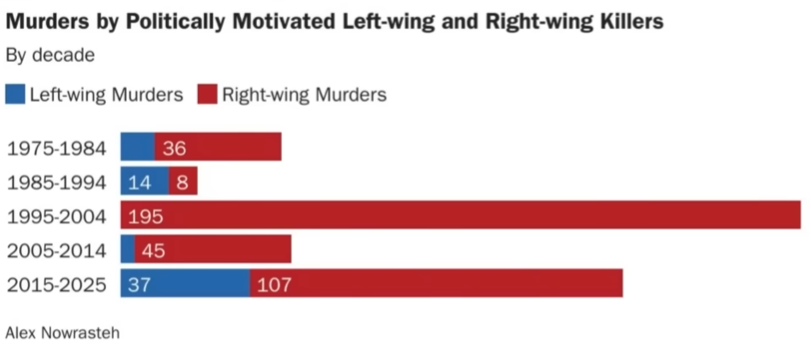
Modernity thinkers like Chase Hughes would have you believe were more evolved towards violence and crime than of the Romans. He hides an implied conservative viewpoint that extreme right-wing is not bloodthirsty as the Romans, but implies the left are for it because they showed a lack of remorse to a covert narcissist podcaster. As modernity indicates it has always been the right side of politics who’s Evil and bloodlust are unmatched.
.
The key to this normalisation lies in the heroic model, which does not accurately reflect reality. In contemporary times, Trump has emerged as a heroic figure for those who embrace this perspective, in an era where the political landscape readily accepts conspiracy theories as part of its campaigning strategy. It is ironic that QAnon followers and MAGA supporters, whom some label as a death cult, dare to claim moral superiority, especially when a lack of morality has been present since the lynching of African Americans. The Rubicon has already been crossed, and it is those with a spirit of grace who remind us that if we forget history, racism will rear its ugly head once again. Modernity in America shows that this is indeed the case, as evidenced by the killing of protester Alex Pretti in Minnesota by ICE agents, who shot him several times in the back. It is those whom Chase Hughes condemns who are fighting against those who present themselves as saints in relation to ICE, while in reality, they wear the cloak of evil.
Society relies on portraying certain behaviours as usual. The key to this normalisation lies in the heroic model, which does not reflect reality. In contemporary times, Trump has emerged as a heroic figure for those who embrace this view, in an era when the political landscape readily accepts conspiracy theories as part of its campaigning strategy. QAnon groups, MAGA groups, white supremacists, and white nationalists—these individuals who consider themselves to be warriors don the “armour of God,” likened to an ICE vest, claiming to prepare for a spiritual battle against supposed evil Satanists. Ironically, they fail to realise or choose to ignore that true evil lies with their cult leader and his administration, demonstrating a remarkable lack of awareness.

